
Fluent Faster Smarter
A Strategic Analysis of Language Acquisition Methods
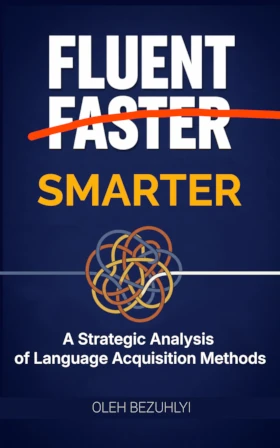
This briefing document provides a detailed synthesis of the core themes, methodologies, and strategic frameworks presented in "Fluent Faster Smarter". It analyzes the structural trade-offs of various language acquisition methods and provides a diagnostic approach for learners to build sustainable systems based on their specific constraints.
Executive Summary
The central thesis of the book is that language learning advice is fundamentally broken because it generalizes success without accounting for individual context. There is no "perfect" method; rather, every approach optimizes for specific skills while deliberately sacrificing others.
Critical Takeaways:
- The B2 Threshold: Functional fluency (B2) is defined as independence, where the learner stops translating and starts participating. Reaching this requires hundreds of hours of input and deliberate output.
- The Lie of "Fast Fluency": Efficiency gains are real (20–40%), but "skipping the hard part" is a myth. Success is predicted by a learner’s ability to design a system around their weakest traits.
- Method-Hopping vs. Consistency: Learners often fail by abandoning systems before they are designed to work. Consistency is defined as frequency (daily contact) rather than "heroic" short-term effort.
- The Role of AI: AI has removed the scarcity of practice but introduced a danger of passivity. It is best used as a rehearsal tool and multiplier, not a total replacement for human interaction or hard effort.
- Diagnostic Learning: Success depends on identifying non-negotiable constraints: Time Availability, Emotional Load (anxiety), Structure Tolerance, and Cognitive Style.
Already own the book? Activate your free premium access
Enter the Amazon Order ID from your purchase confirmation email. It looks like: 123-4567890-1234567
Don't have the book yet? Grab a copy on Amazon:
Fluent Faster Smarter →